

Views: 0 Author: Site Editor Publish Time: 2026-11-16 Origin: Site
Shifting from manual cutting or basic dispensers to automated precision scaling completely changes your production floor. You need absolute certainty before making this leap. Your equipment must handle your specific substrate flawlessly. It must operate without edge distortion, stretching, or excessive waste.
Unfortunately, not all cutting systems are universally compatible. A machine calibrated perfectly for rigid cardboard will fail disastrously on high-stretch polyurethane films. It simply lacks the right tension control and blade architecture to handle elasticity.
This guide provides a definitive, engineering-focused breakdown of material compatibility. We explore technical limitations and essential evaluation criteria. You will learn how to specify the right equipment. This ensures you select a qualified partner capable of meeting your exact production tolerances.
Material Versatility: Industrial systems can process everything from 20µm delicate films to 20mm thick foams, provided the blade type (guillotine vs. rotary) matches the substrate.
Critical Limitations: Machine capability is dictated by material rigidity, tensile strength, and roll diameter (standard 400mm vs. extended 1000mm for foams).
Validation is Mandatory: Never purchase based on a spec sheet alone; a reliable roll to sheet cutting machine manufacturer will require physical material samples to prove ±0.1mm tolerance claims before finalizing a build.
Cutter vs. Slitter: Roll-to-sheet machines perform cross-cuts (sheeting); slitters perform longitudinal cuts (rewinding into narrower rolls). Many modern systems integrate both.
Mapping specific substrates to typical machine processing capabilities is crucial. A Roll to sheet cutting machine processes various categories. However, each material demands distinct mechanical handling.
Standard processing covers a massive range of paper products. It handles everything from delicate tissue and thermal paper to heavy kraft. Industrial models easily slice through 300+ gsm cardboard.
You must watch out for surface marking. High-pressure feeding rollers can damage coated or printed surfaces. We recommend specialized rubber-coated rollers to prevent this issue. Furthermore, you need photoelectric eye mark sensors. These sensors detect registration marks to ensure perfectly aligned cuts on pre-printed paper rolls.
Modern equipment handles PET, PVC, and PE plastics smoothly. They also process metalized films and aluminum foils. These substrates typically range between 20 and 100 µm in thickness.
These materials introduce significant processing caveats. Thin films are highly susceptible to static buildup. They also stretch easily under tension. You must use precision unwind stands to prevent material warping. These stands require advanced web tension control systems. Magnetic powder brakes and clutches maintain perfect tension. Static eliminators (ionizing bars) are mandatory to stop thin films from clinging to machine chassis.
This category includes low-density materials like bubble wrap and EPE foam. It also covers dense silicone rubber up to 20mm thick.
Rotary blades often fail completely here. A rotary blade pushes material forward during the cut. This compresses foam and leaves a distorted, angled edge. Heavy-duty guillotine cutting units solve this problem. They provide massive downward shear force. This cleanly severs thick materials without compressing the edge. You will also need extender brackets. Foam materials bulk up quickly. Standard unwinds hold 400mm rolls. You need extenders for large roll diameters up to 1000mm.
Industrial cutters slice through fiberglass, Teflon, and transfer films. They excel at processing non-woven fabrics used in medical filters.
However, extremely limp or highly elastic textiles pose a major challenge. They lack the native rigidity required for automated feeding. Standard rollers simply push the fabric into a crumpled jam. You must install specialized carrier belts. These belts support the material fully. Edge tensioning guides also help keep the fabric taut before the blade drops.
Material Compatibility Summary Chart | |||
Material Category | Typical Thickness/Weight | Required Blade Type | Critical Processing Add-Ons |
|---|---|---|---|
Paper & Cardboard | 40 gsm – 300+ gsm | Rotary or Guillotine | Photoelectric sensors, non-marking rollers |
Films & Foils | 20 µm – 100 µm | Rotary or Flying Knife | Static eliminators, magnetic powder brakes |
Foams & Rubber | Up to 20mm thick | Heavy-duty Guillotine | Roll extenders (1000mm), strong shear mechanics |
Textiles & Non-wovens | Varies widely | Guillotine or specialized rotary | Carrier belts, edge tension guides |
Engineering specifications dictate whether a material can actually be cut effectively. You must align these specs to your specific substrate.
Quality machines frequently claim ±0.1mm to ±0.3mm precision. However, you should view these numbers as theoretical maximums. Actual precision depends heavily on material slip.
If your substrate slides between the rollers, precision disappears. Ensure the machine uses servo-driven feeding rollers. The manufacturer must tailor the roller material to your substrate's friction coefficient. Polyurethane rollers grip slippery films well. Knurled steel rollers work better for heavy, non-sensitive rubber.
Machine speed fluctuates based on material rigidity and weight. You cannot run 20mm foam at the same speed as standard copier paper.
Rigid Materials: Paper and cardboard feed exceptionally well. They can achieve high speeds ranging from 50 to 350 meters per minute. They easily hit 100+ cuts per minute.
Thick Materials: Foams and thick rubbers require much slower feed rates. This prevents the material from piling up behind the blade.
Delicate Materials: Thin films need slower acceleration. Sudden jerks will snap the web or cause stretch distortion. Slowing the feed maintains edge quality. It also prevents dangerous blade deflection.
Selecting the wrong blade destroys your material. You must specify the correct cutting action.
Rotary Knife: This blade spins continuously against a stationary bottom anvil. It works best for high-speed paper cutting and thin films. It offers the fastest cycle times.
Guillotine (Scissor-action): This blade drops vertically. It provides immense shear force. It works best for thick boards, rigid plastics, and spongy foams. It cycles slower but cuts cleaner on thick substrates.
Flying Knife: This blade travels alongside the moving web. It executes the cut without stopping the material flow. Manufacturers use it for ultra-high-speed continuous web operations.
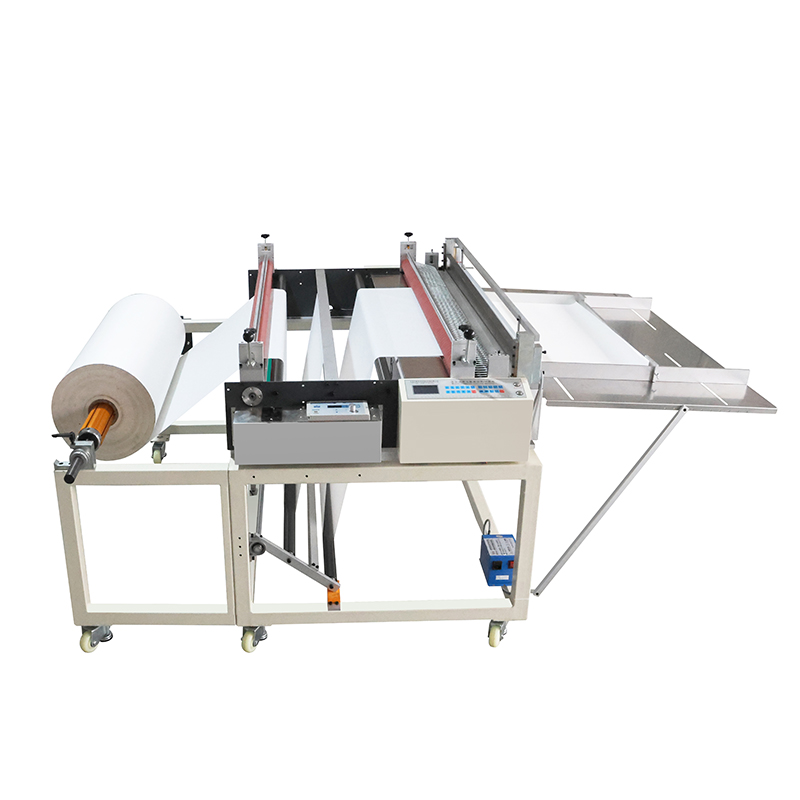
The factory floor reveals the true limits of any automated equipment. You must understand what goes wrong and how to mitigate those risks.
Skeptically evaluate claims regarding a singular perfect machine. Sales brochures often suggest one standard machine cuts everything perfectly. This rarely proves true in practice.
Changing your production from heavy rubber to thin film requires major mechanical adjustments. You must alter the blade gap clearance. You must change the roller pinch pressure. A machine tuned for heavy rubber will crush thin films. A machine tuned for thin film lacks the torque to push rubber. You should request recipe-saving features in the PLC to make changeovers easier.
Your cutting machine cannot fix terrible source materials. Poorly wound source rolls cause constant headaches.
Telescoping rolls have uneven edges. This creates diagonal tension across the web. It will cause feeding jams and crooked cuts. This happens regardless of the cutting machine's innate quality. You need hardware to compensate for bad rolls. Edge guiding systems are necessary upgrades. Web guiding units like EPC (Edge Position Control) or LPC (Line Position Control) physically shift the unwind stand. They keep the material perfectly centered before it reaches the blade.
Different substrates degrade blades at vastly different rates. Cutting standard paper allows a blade to last for months. Cutting abrasive materials changes the timeline entirely.
Materials like fiberglass or metalized foils act like sandpaper. They rapidly degrade standard steel blades. You must factor in the cost of carbide. Specialized hardened blades cost more upfront but prevent constant downtime.
Assess the machine's maintenance Standard Operating Procedure (SOP). Ask the vendor a simple question. Does a standard blade change take 10 minutes or 2 hours? If operators must disassemble the entire feeding unit to reach the anvil, your downtime costs will skyrocket.
Common Processing Mistakes & Solutions | ||
Symptom | Likely Cause | Recommended Action |
|---|---|---|
Angled / Crooked Cuts | Telescoping source roll or uneven roller pressure | Install EPC web guide; recalibrate pinch roller tension. |
Concave Foam Edges | Blade compressing material before shearing | Switch from rotary to guillotine blade; sharpen blade. |
Inconsistent Lengths | Material slipping on feed rollers | Upgrade to servo motors; swap to high-friction PU rollers. |
Material Clinging | Static electricity buildup | Install ionizing static eliminator bars near the blade. |
Choosing equipment requires strict shortlisting criteria. You need an enterprise-level procurement strategy to vet suppliers properly.
A trustworthy Roll to sheet cutting machine manufacturer acts like a partner, not a catalog vendor. They will not sell you a machine blind.
They should insist on running your actual material through their equipment first. Ship them a sample roll. They must send back the cut samples alongside a detailed video report. This unedited video proves the machine hits your specified throughput and accuracy. If a vendor refuses this testing, walk away immediately.
Evaluate the origin of all critical automation components. You must avoid proprietary lock-in at all costs.
Look at the PLC (Programmable Logic Controller) and HMI (Human Machine Interface). Check the servo motors and photoelectric sensors. These should come from recognized, industrial brands. Look for names like Siemens, Mitsubishi, or Omron. If a component fails in five years, you need to buy a replacement locally. Obscure, white-labeled electronics will turn your machine into useless scrap when they fail.
Industrial cutting machines cause severe injuries if poorly designed. You must mandate strict safety features.
The machine must feature physical interlocked safety guards. Operators must never interact with an active blade area. Opening a guard must immediately sever power to the blade motor. Look for prominent emergency stop buttons on all sides of the chassis. Ensure the equipment complies with regional safety standards like CE for Europe or UL for North America.
Vague warranty promises offer zero protection. Look for clear, bifurcated warranty terms in the contract.
Electronic components usually carry different lifespans than heavy steel blocks. A standard, fair Service Level Agreement (SLA) offers 1 year on electronic PLC components. It should offer at least 2 years on the mechanical chassis and frame. Ask how they handle tech support. You need video call troubleshooting capabilities to minimize costly service visits.
Automated cutting systems provide massive leaps in production capacity. They remain highly adaptable assets. However, their success relies entirely on matching the machine's mechanics to your material's physics. You must align tension control, blade architecture, and feeding mechanisms flawlessly. Ignoring material stretch or rigidity will result in wasted substrates and stalled production lines.
Audit your current material dimensions today. Document your maximum web width, maximum roll diameter, and thickness range. Calculate your required daily throughput. Next, contact a qualified manufacturer to arrange a physical material sample test. Demand a data-backed capability report before signing any purchase orders. Taking these precise steps ensures a smooth, highly productive equipment integration.
A: Standard machines only perform cross-cutting (sheeting). They sever the web horizontally. However, many manufacturers offer optional slitting blade attachments. These add-ons allow the machine to perform both longitudinal slitting and horizontal cross-cutting simultaneously. This turns one wide roll into multiple narrow stacked sheets.
A: It depends heavily on material density. Soft materials like foam or sponge process easily up to 15mm–20mm thick using a guillotine setup. Rigid plastics or heavy cardboards hit their limits much earlier. High-density materials cap out at lower thicknesses to prevent the blade motor from stalling.
A: Not if you specify the machine correctly. For sensitive materials like thermal paper or glossy printed films, standard steel rollers cause damage. Machines must use specialized rubber or PU-coated pinch rollers. These softer rollers distribute pulling tension evenly without scratching or marking the delicate surface.
