

Views: 0 Author: Site Editor Publish Time: 2026-06-15 Origin: Site
Material waste directly erodes profit margins. This happens constantly during roll to sheet cutting. High-value substrates like vinyl, specialty papers, and metallic foils compound this loss. You might think aiming for zero waste makes sense. However, zero waste remains mathematically and mechanically impossible. Physical processes always demand tiny tolerances.
Instead of chasing zero waste, focus on measurable reductions. Decreasing trim limits, minimizing edge damage, and eliminating miscuts by fractions of a percent yields massive returns. These incremental improvements compound rapidly over high-volume production runs. We designed this guide to help you identify exact waste sources on your production floor.
We will provide an actionable evaluation framework. You will learn to determine whether your yield loss stems from software limitations, hardware degradation, or poor supplier alignment. We will also show you exactly how to fix these underlying issues to maximize your material utilization.
Software alignment: Algorithmic nesting and dynamic length calculations are baseline requirements for high-yield cutting.
Mechanical precision: Poor web tension and dull blades are the leading causes of physical material damage during the unwinding and slitting phases.
Customization matters: Off-the-shelf equipment often forces compromised trim margins; targeted machine configurations reduce edge waste natively.
Supplier vetting: Long-term yield relies on preventative maintenance and operator training provided by the manufacturer.
Before investing in new assets, operators must categorize their current waste. You cannot fix an invisible problem. Framing the audit properly gives you a clear target. We highly recommend observing your machines during active production shifts. Documenting errors as they happen provides the most accurate data.
We categorize yield loss into two distinct buckets. Operational waste stems from poor planning. Inefficient cut plans cause significant yield drops. Manual calculation errors occur frequently. For example, operators often misjudge roll length variations. A standard 50m roll often yields short due to manufacturer tolerances. Poor nesting logic leaves usable material on the cutting floor.
Mechanical waste happens during physical execution. Edge wandering destroys the outer margins. Tension inconsistencies cause severe stretching. This stretching creates inaccurate sheet lengths, especially in vinyl and plastics. Blade drag damages the substrate surface during the slitting phase.
Use the chart below to categorize your daily scrap:
Waste Category | Primary Symptoms | Common Root Causes |
|---|---|---|
Operational | Excessive offcuts, short total yield, poorly grouped lengths. | Manual calculations, lack of nesting algorithms, operator fatigue. |
Mechanical | Scratched surfaces, edge wander, stretched sheets. | Failed web guides, incorrect tension settings, dull blades. |
Establishing a baseline waste percentage serves as your primary success criteria. You must measure future improvements against this hard number. Track scrap weights against total material input for a full week to find your baseline.
Assessing your current hardware represents the next logical step. You must determine whether current equipment can meet your required tolerances. Old frames and outdated motors struggle to maintain modern precision standards. Physical vibration alone can throw off your cut accuracy.
Automated edge alignment prevents material telescoping. It dynamically adjusts the roll position as the material unwinds. This precision dramatically reduces necessary trim allowances. You no longer need to sacrifice an inch of edge material just to guarantee a straight cut.
Variable tension control plays a vital role. It prevents stretch-induced length inaccuracies. Substrates behave differently as the master roll shrinks in diameter. The system must adjust braking force continuously. You must maintain consistent web tension from the core to the outer layer.
Evaluating blade types remains critical for clean edges. Match your blade type strictly to your material properties. Shear blades work best for thick papers and foils. Razor blades handle thin plastics beautifully. Crush blades excel when processing non-woven fabrics.
Automated blade positioning minimizes human error during setup. Operators often make slight miscalculations during manual changeovers. Automated systems move knives precisely based on digital inputs. A modern Roll To Sheet Cutting Machine must feature closed-loop feedback systems. These sensors maintain tight accuracy at extremely high speeds.
Common mistakes to watch out for during slitting include:
Running shear blades past their recommended sharpening cycle.
Using excessive downward pressure on crush blades.
Ignoring micro-vibrations in the slitter shaft.
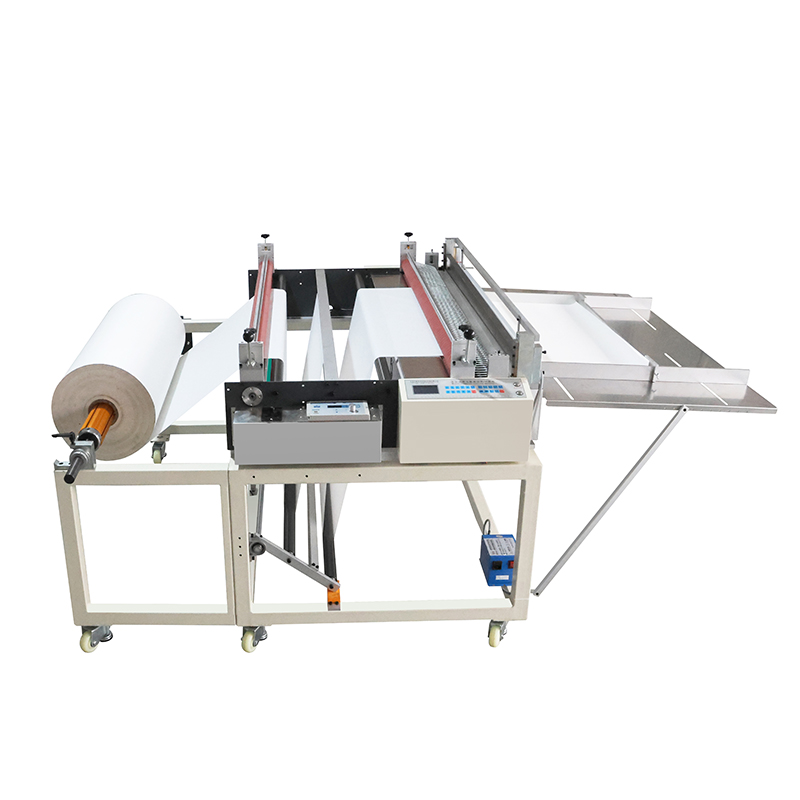
Standard widths often force unnecessary trim waste. Manufacturers design off-the-shelf equipment for broad market appeal. They rarely match your exact master roll dimensions. This slight mismatch forces operators to trim valuable material continuously.
Standardizing equipment width to your most common master roll sizes eliminates lateral waste natively. If you always run 1200mm web widths, a 1600mm machine creates instability. The extra shaft length invites vibration. A perfectly matched machine frame holds the material rigid.
Delicate materials require specialized handling. Integrating specialized unwinding stands protects fragile surfaces. Custom accumulation rollers maintain tension safely. These specific upgrades prevent surface scratches and edge curling.
You must weigh lead times and initial capital expenditures carefully. Compare these upfront numbers against your long-term operational savings. A perfectly engineered customized roll to sheet cutting machine increases your material utilization daily. These daily fractions add up to massive annual returns.
We maintain a highly transparent assumption here. Customization only proves cost-effective under certain operational conditions. Your production volume and material value must justify the engineering premium. Low-volume runs of cheap paper do not require bespoke engineering.
Moving away from manual calculations eliminates costly human errors. Your operators cannot calculate complex layouts efficiently in their heads. Even simple spreadsheet calculators fall short. Algorithmic planning handles hundreds of variables instantly.
Modern optimization software interfaces seamlessly into cutting PLCs. It sends dynamic instructions directly to the servo motors. It groups variable sheet lengths efficiently. This intelligent grouping minimizes the gaps between different cut jobs. The machine executes the optimal plan without hesitation.
Addressing the remnant roll problem requires diligent tracking. Partial rolls often sit in warehouses gathering dust. Eventually, they become scrap. Optimization software tracks partial rolls meticulously. It integrates them into future cut jobs smoothly. This active management prevents end-of-roll scrap entirely.
Follow these steps to integrate nesting software effectively:
Audit your current standard sheet sizes and identify common variations.
Input your exact machine tolerances into the software parameters.
Run a digital simulation before pushing the plan to the PLC.
Train operators to trust the algorithm rather than second-guessing the layout.
Hardware quality heavily depends on its support ecosystem. You need strong backing from the manufacturer. Even the best machines require periodic calibration. A poor support network turns minor mechanical issues into massive material waste events.
You must know what distinguishes a reliable cutting machine supplier from a mere equipment broker. Brokers sell boxes. True suppliers sell ongoing precision. Evidence of performance matters most. Demand verifiable run-tests before you sign a purchase order. They must cut your specific material in their facility.
Evaluate their after-sales infrastructure deeply. Verify the availability of OEM spare parts. You need fast access to blades, sensors, and belts. Delays in parts shipping force operators to run degraded equipment. Degraded equipment produces terrible waste.
Supplier-led operator training ensures operational success. Many machine upgrades fail purely due to human factors. Operators often override automated tension settings. They ignore alignment controls due to a lack of familiarity. Comprehensive training builds confidence and compliance.
Best practices for risk mitigation include:
Scheduling quarterly maintenance reviews.
Keeping spare sensors on your own shelf.
Mandating refresher courses for all machine operators annually.
Reducing waste requires a highly synchronized approach. You need mathematically optimized cut plans. Tightly calibrated hardware must execute those plans flawlessly. Fixing just the software or just the hardware leaves gaps in your yield protection.
We advise you to conduct a strict 30-day waste audit immediately. Categorize your scrap strictly by mechanical failure versus trim allowance. Gather this baseline data before you initiate RFQs for new software or machinery. You will make far better procurement decisions once you understand your exact failure points.
A: It varies highly by material and output size, but typically ranges from 1% to 3%. Anything higher usually indicates mechanical misalignment or poor cut planning. You should investigate any sudden spikes immediately to prevent compounding losses.
A: No. Nesting software optimizes the plan, but if the physical machine lacks tension control or web guiding, the actual execution will still produce edge damage and length variations. Software and hardware must work together.
A: When structural wear prevents the addition of modern web guides or tension sensors, replacing becomes necessary. Issues like frame vibration or outdated proprietary PLCs make retrofitting impossible. At this stage, replacement becomes more cost-effective than constant material loss.
