

Views: 0 Author: Site Editor Publish Time: 2025-11-14 Origin: Site
In the fast-paced world of industrial manufacturing, efficiency and precision are paramount. One tool that plays a crucial role in ensuring both of these factors is the roll to sheet cutter. This machine is integral to industries that process large rolls of material, such as paper, plastic, textiles, and various films, by converting them into smaller, manageable sheets. Whether it's in packaging, printing, or production of consumer goods, the roll to sheet cutter has proven to be a vital component in transforming bulk materials into usable formats.
This article explores the function, benefits, and importance of roll to sheet cutters in manufacturing processes, providing an understanding of how they work, the advantages they offer, and factors to consider when choosing the right machine for your operation.
A roll to sheet cutter is a type of industrial cutting machine that takes large rolls of material—often referred to as webs—and converts them into individual sheets of a specific size. The rolls may consist of various materials, including paper, plastic film, fabric, foil, or non-woven materials. The process typically involves unwinding the roll, feeding it through a cutting mechanism, and then slicing it into predetermined sheet sizes, which are either stacked or rolled up for further processing or packaging.
The versatility of roll to sheet cutters means they are used in various industries, from packaging and printing to textiles, automotive, and electronics. The cutting system can vary depending on the materials being processed and the desired precision, but most roll to sheet cutters share common components, such as a feed system, a cutting mechanism, a control system, and a stacking or winding unit.
Unwinding System:
The unwinding system is the first step in the roll to sheet process. It involves the unrolling of large material rolls from a central spindle. The unwinder is typically equipped with a tension control system to ensure that the material remains taut as it moves through the cutter. Proper tensioning is crucial to ensure smooth, accurate cuts without material defects.
Cutting Mechanism:
The cutting mechanism is the core of the roll to sheet cutter. It uses a variety of cutting methods, including rotary cutting, guillotine cutting, or laser cutting, depending on the material and the machine's design. The cutter is calibrated to make precise, straight cuts at specific intervals, turning the roll into sheets of uniform size. In more advanced machines, the cutting mechanism may also include features like slitting to divide wider rolls into narrower widths before cutting them into sheets.
Control System:
Modern roll to sheet cutters come equipped with digital control systems or programmable logic controllers (PLCs) that allow operators to set precise parameters for cutting size, speed, and material handling. The control system ensures the cutting process is automated and that sheets are produced at high speed with minimal human intervention. Some systems allow for real-time monitoring, adjusting cutting speed, or material tension on the fly to accommodate varying material thicknesses or types.
Stacking or Winding Unit:
After the material is cut into sheets, the next step is organizing them. In many roll to sheet cutting systems, a stacking mechanism gathers the sheets and arranges them in neat piles. Alternatively, in some operations, the sheets may be wound into smaller rolls for storage or shipping. The choice between stacking and winding depends on the nature of the material and how it will be used later in the production process.
One of the most significant benefits of using a roll to sheet cutter is the increase in operational efficiency. In traditional cutting methods, materials are often manually measured and cut, a process that can be both time-consuming and prone to human error. With a roll to sheet cutter, materials can be automatically fed through the machine and cut into precise sheets at high speed, reducing the time and labor required.
Roll to sheet cutters are designed to provide high precision in the cutting process. Whether the material is paper, plastic, or fabric, these machines can produce sheets with consistent dimensions, ensuring that the finished product meets quality standards. The use of digital control systems ensures that cuts are made to exact specifications, providing uniformity across large production runs. This level of consistency is particularly important in industries such as printing or packaging, where precision is crucial to achieving the desired result.
A roll to sheet cutter is adaptable to a wide range of materials. From flexible films to textiles and paper, these machines can be used across multiple industries. The versatility of roll to sheet cutters allows businesses to streamline their production processes, handling various materials on the same machine without the need for specialized cutters for each material.
One of the challenges in any manufacturing process is minimizing waste. With roll to sheet cutters, waste is minimized because the machine is designed to make accurate, clean cuts. Furthermore, many modern roll to sheet cutters are equipped with advanced tension control systems that ensure materials are fed smoothly and precisely, reducing the chance of defects or waste. This optimization is particularly important for high-value materials where even small amounts of waste can result in significant cost losses.
Over time, the use of a roll to sheet cutter can lead to substantial cost savings. The combination of reduced labor, minimized waste, and increased efficiency helps to lower overall operational costs. In industries where profit margins are tight, these savings can be crucial in maintaining competitiveness and profitability.
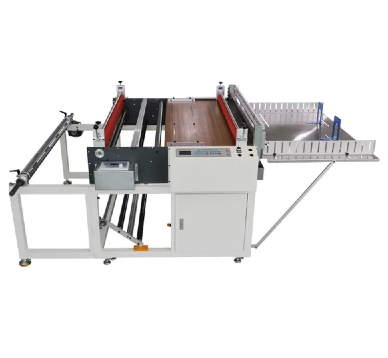
Roll to sheet cutters are used in a variety of industries, with each industry benefiting from the unique capabilities of the machine. Below are a few key examples:
The packaging industry relies heavily on roll to sheet cutters to convert large rolls of paper, plastic, and other packaging materials into sheets that can be further processed. Whether it’s creating custom-sized packaging, labels, or shrink wraps, roll to sheet cutters ensure that the materials are cut with precision and speed, ready for printing or packaging production.
In printing, the roll to sheet cutter is used to cut printing paper, cardboard, and labels into precise sizes for printing presses. The high precision of these machines ensures that the sheets align perfectly with the printing press, preventing misprints and ensuring efficient use of paper or other media.
The textile industry also benefits from roll to sheet cutters. Fabrics and textiles often come in large rolls and must be cut into sheets of specific sizes for garment manufacturing, upholstery, or other fabric-based products. The roll to sheet cutter provides a quick and efficient method to achieve this, helping manufacturers keep up with demand and maintain consistency across production runs.
In the processing of non-woven materials or foils, the roll to sheet cutter is an essential tool for ensuring the material is cut with exact measurements. Whether in medical, automotive, or electronics applications, these materials must be processed with precision to meet industry standards, and roll to sheet cutters provide a reliable solution.
When selecting a roll to sheet cutter for your business, several factors should be considered:
Material Type: The type of material you will be cutting (paper, plastic, fabric, etc.) will determine the type of cutter you need. Some materials may require specialized cutting mechanisms, such as rotary blades for films or a guillotine cutter for thicker materials.
Cutting Precision: Depending on the end-use of the sheets, precision may be a critical factor. If your business requires high accuracy and consistency, ensure the machine offers tight tolerance settings and a reliable control system.
Speed and Throughput: Assess the required cutting speed and throughput for your operation. High-volume production environments may need a faster machine with a higher sheet output, while smaller operations may prioritize efficiency and flexibility.
Machine Size and Footprint: Consider the available floor space in your facility. Roll to sheet cutters come in various sizes, and it's important to select a machine that fits your production floor and can handle the required roll sizes.
The roll to sheet cutter is an essential tool for industries that rely on converting large rolls of material into sheets for further processing. With its ability to improve efficiency, enhance precision, and reduce waste, it has become a critical component in modern industrial manufacturing. By considering material type, precision, speed, and space requirements, businesses can choose the right roll to sheet cutter to streamline their operations and improve profitability. This machine continues to play a vital role in packaging, printing, textiles, and many other industries, offering significant benefits across the board.
For companies looking to invest in high-quality roll to sheet cutters, the right choice can help optimize production processes, minimize waste, and enhance overall productivity, leading to a better bottom line and improved business performance.
