

Punching Cutting Machine Vs Die Cutting Machine
Views: 0 Author: Site Editor Publish Time: 2026-06-08 Origin: Site
Manufacturers constantly battle the ceiling of production speed. Scaling output usually means pushing equipment to its limits. When speeds increase, cut registration often slips and tooling expenses skyrocket. This dynamic creates a severe operational bottleneck. Resolving it demands a closer look at your cutting equipment.
Selecting between cutting technologies involves distinct mechanical principles suited for entirely different applications. Both methods slice through substrates. Yet, their core mechanisms handle varying production volumes, material properties, and precision tolerances differently. Choosing poorly directly harms your yield and inflates waste streams. You need machinery aligned with your specific output goals.
This guide delivers a technical and financial comparison of heavy-duty cutting systems. Operations managers and facility buyers will discover actionable criteria to evaluate machinery objectively. You will learn how to choose the optimal solution for your specific manufacturing or packaging line.
Key Takeaways
Die cutting machines excel at high-speed, high-volume production of complex, multi-axis shapes but require higher upfront tooling investments.
A punching cutting machine offers superior accuracy for repetitive, localized cuts (like holes, slots, or contour matching), often with lower tooling costs and faster changeovers.
For pre-printed webs or materials requiring exact graphic-to-cut alignment, an eye position punching cutting machine minimizes registration errors and material waste.
Selecting a custom punching cutting machine solution is often necessary when dealing with non-standard material thicknesses, multi-layer laminates, or proprietary workflow integrations.
Framing the Decision: Production Bottlenecks and Success Criteria
Operations teams must evaluate mechanical upgrades through strict success criteria. The choice between die cutting and punching technologies relies heavily on understanding your baseline production bottlenecks. Facility managers should audit their lines to uncover the actual sources of inefficiency.
Analyze the financial impact of custom steel-rule dies versus standard punch-and-die sets. Consider a typical production run spanning 10,000 to 100,000 units. Steel-rule dies degrade over time. Their replacement frequency adds significant overhead to large volumes. Alternatively, standard punch sets offer extended durability. They often outlast conventional dies when processing dense substrates. Evaluating these lifecycle tooling expenses helps justify initial capital investments.
Registration accuracy serves as another critical performance metric. Production lines often demand allowable tolerance levels as tight as +/- 0.1mm. Material shifts during continuous feeding routinely compromise these tolerances. Even a microscopic slip impacts your final yield drastically. Identifying how much lateral drift your current setup allows will guide your equipment selection.
Finally, assess your workflow integration needs. Determine whether your goal is inline processing or offline finishing. Web-fed inline systems require synchronized tension control. Sheet-fed offline setups demand precise material handling protocols. Furthermore, consider how the proposed machine footprint fits your existing facility constraints. Cramped floor spaces might restrict the adoption of large rotary die systems.
Die Cutting Machines: Capabilities, Tooling, and Limitations
Die cutting machines dominate high-volume converting sectors. They operate using two primary mechanical frameworks: flatbed and rotary. Flatbed systems utilize hydraulic pressure to press a steel-rule die into the substrate. Rotary systems feature cylindrical dies spinning at high speeds. Both methods crush the material against a hardened anvil to separate the desired shape.
These machines demonstrate massive strengths in high-volume environments. They excel at cutting complex geometries rapidly. Furthermore, they can simultaneously cut, crease, and perforate materials in a single pass. This multi-functionality streamlines packaging production significantly. Box folding and carton manufacturing rely heavily on these simultaneous operations.
However, implementation realities present distinct challenges. Frequent die maintenance and replacement remain unavoidable. The cutting blades dull rapidly when processing abrasive substrates. Operators must monitor blade sharpness to prevent edge fraying on finished goods.
Setup times also pose a major hurdle. Performing a "make-ready" requires highly skilled operators. They must adjust pressure levels meticulously to ensure uniform cuts across the entire web width. These adjustments consume valuable production hours. Moreover, adapting to sudden design changes happens slowly. Physical die manufacturing involves considerable lead times. You cannot easily pivot a production line when waiting for external vendors to ship a new steel-rule die board.
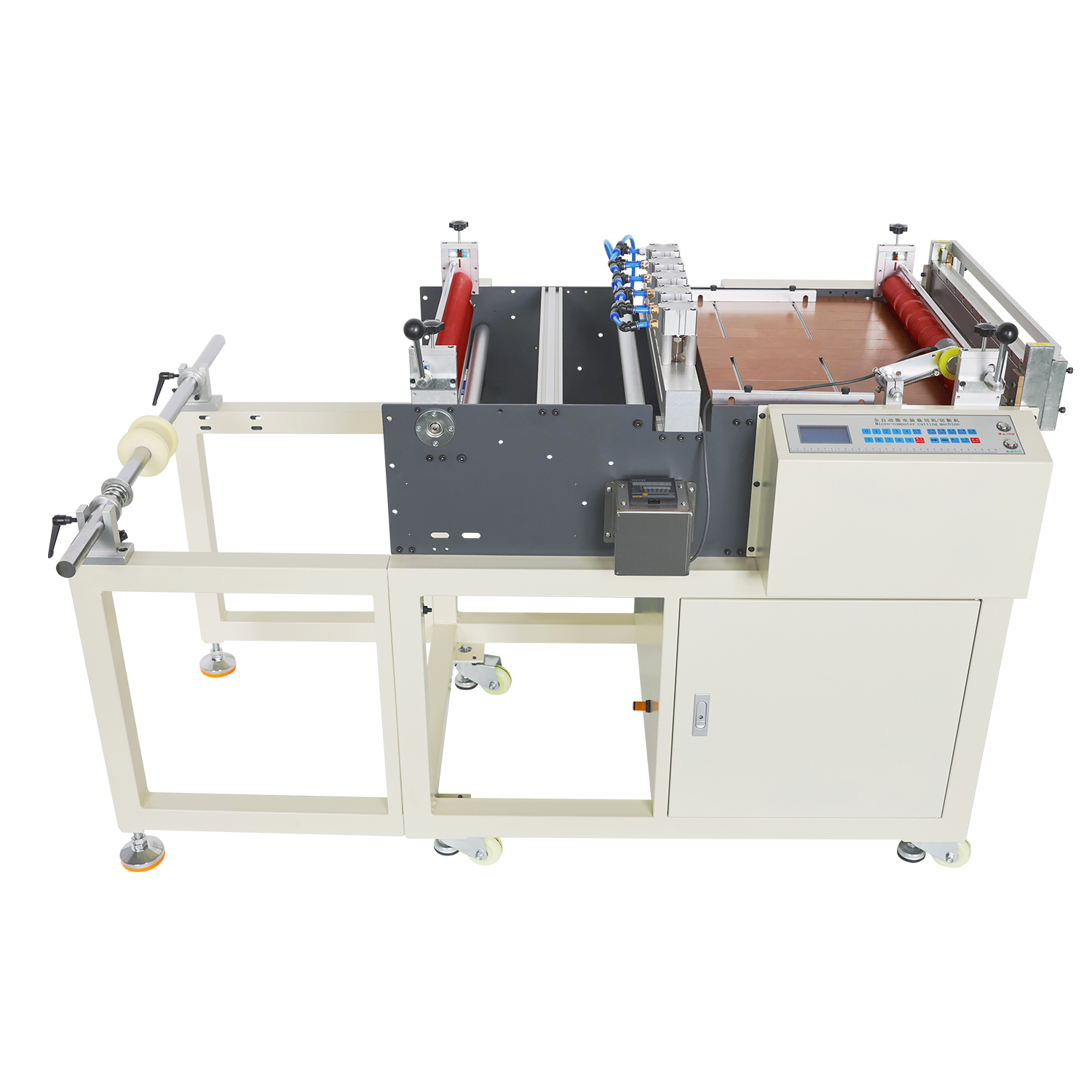
Punching Cutting Machine Core Mechanics and Advantages
A Punching Cutting Machine relies on distinctly different mechanical principles. It utilizes a matched male-female punch mechanism. The machine drives a hardened tool downward into a precise lower die. This action applies vertical shearing force rather than crushing pressure. The substrate shears cleanly between the tight tolerances of the top and bottom tools.
This vertical shearing mechanism unlocks high-precision applications. It proves vastly superior for handling thick materials. Rigid substrates resist the crushing action of standard die cutters. Punching shears through them effortlessly. Industries manufacturing membrane switches, RFID tags, and automotive gaskets heavily favor this technology. It guarantees precise hole placements without warping the surrounding material.
Tooling return on investment is highly favorable here. Hardened steel punches boast exceptional longevity. They withstand millions of cycles before requiring maintenance. Furthermore, the swap-out process happens rapidly. Operators can exchange individual punch components quickly compared to replacing massive, full-scale die boards. This modularity reduces changeover downtime.
The Role of the Eye Position Punching Cutting Machine
Advanced manufacturing demands flawless alignment. An Eye Position Punching Cutting Machine integrates optical sensor technology to achieve this. These systems utilize CCD cameras or photoelectric sensors. The sensors track pre-printed registration marks on the incoming material web.
Once the sensor identifies a mark, dynamic adjustment takes over. The machine actively compensates for web stretch. It also corrects print drift along the X and Y axes prior to initiating each punch. Micro-stepper motors shift the material into the exact required position instantly.
This optical registration process drives massive waste reduction. Standard blind-feed cutting setups frequently suffer from a "drifting" defect. The material wanders slightly off-path, ruining thousands of units. Quantifiably, active visual tracking prevents this drift entirely. It ensures the graphic perfectly aligns with the physical cut every single time.
Head-to-Head Evaluation: Features to Commercial Outcomes
Comparing these technologies head-to-head requires looking beyond raw specifications. You must translate mechanical features into tangible commercial outcomes. Production speed and setup time represent the first major trade-off.
Rotary dies provide continuous, uninterrupted output. Their spinning cylinders process web materials at incredible velocities. However, configuring those rotary cylinders takes substantial time and effort. Conversely, punch press setups operate at slower cycles per minute. They process materials step-by-step. Yet, they offer rapidly configurable setups. You recover the lost running speed through faster job changeovers.
Material compatibility dictates the ideal machine choice. Some substrates inherently fail under certain cutting methods.
Technology | Ideal Material Types | Performance Characteristics |
|---|---|---|
Die Cutting | Paperboard, corrugated board, thin plastics, adhesive labels | Crushes and separates fibers effectively. Prone to edge-crush on thick items. |
Punching | Dense plastics, multi-layer laminates, metals, industrial textiles | Shears cleanly without material distortion. Maintains internal hole integrity. |
Scalability and maintenance practices differ wildly between the two systems. Contrast the lifecycle demands of sharpening punches versus re-ruling dies. Maintaining a punch involves grinding a flat surface back to a sharp edge. This happens quickly. Re-ruling a die board requires bending new steel blades and fitting them into wooden or metallic slots. You must evaluate the facility downtime required for each specific maintenance cycle.
Implementation Risks and Rollout Considerations
Deploying new industrial equipment introduces operational risks. Facility managers must plan for operator adoption curves. Managing digital sensor calibration on eye-position systems requires technical literacy. Workers must understand camera focus, contrast settings, and digital interfaces. Meanwhile, traditional die cutters rely on mechanical pressure adjustments. They require a physical "feel" developed through years of manual operation. Transitioning staff between these paradigms demands structured training programs.
Common Mistake: Failing to account for environmental factors often derails new equipment rollouts. Dust generation heavily impacts optical sensors. Facility managers must install proper extraction vacuums. Thick materials frequently suffer from edge-crush risks if the tonnage is incorrectly calibrated. Additionally, static electricity accumulation occurs during high-speed runs with synthetic webs. You must install anti-static bars to prevent material jams.
Vendor reliability plays a decisive role in long-term success. Emphasize the importance of assessing OEM support capabilities. Verify parts availability, especially for specialized sensors and custom replacement punches. Ensure the machinery complies with strict industrial safety standards. Look for documented OSHA compliance in North America or CE directives in Europe. Inadequate machine guarding creates severe liability risks.
Specifying a Custom Punching Cutting Machine Solution
Standard machinery cannot solve every manufacturing challenge. Sometimes off-the-shelf equipment fails to meet unique production parameters. Identifying the triggers for a custom build saves time and capital. Triggers include non-standard web widths that exceed standard platen sizes. Unique material behaviors, such as extreme elasticity or severe thermal expansion, also require tailored handling systems. Proprietary inline integration demands specialized communication protocols.
When these triggers occur, you need to specify a custom punching cutting machine solution. Proper scoping ensures the vendor delivers exactly what your line requires. Use a structured framework for communicating with engineering teams.
Provide vendors with this exact scoping framework:
Submit exact material samples: Send production-grade materials, not prototypes. Define the exact required cycle times and allowable scrap margins.
Define integration points: Outline how the machine receives and outputs material. Specify requirements for automatic unwinding, waste matrix removal, and finished part stacking.
Establish testing criteria: Create rigorous factory acceptance testing (FAT) protocols. Base these tests on your specific tolerance demands. Do not sign off until the machine holds registration at full production speed.
Clear documentation accelerates the custom engineering process. It prevents misunderstandings regarding tension control and tool clearance.
Conclusion
Selecting the optimal cutting technology hinges on a fundamental rule. Choose die cutting for high-volume shape generation where complex, multi-axis geometries dominate. Choose punching machinery for precision, tool durability, and exact registration on localized cuts. Understanding this core division prevents costly equipment misalignments.
We recommend conducting a strict internal audit. Review your production waste logs over the last three months. Determine if registration drift or excessive tooling maintenance represents your primary profit leak. Data will highlight exactly which mechanical upgrade your facility requires.
Stop relying on assumptions. Request a material testing consultation today. Ask your equipment vendor to perform a pilot run using your exact substrates. Seeing the physical cut quality firsthand guarantees a confident, data-driven procurement decision.
FAQ
Q: What is the typical lifespan of tooling in a punching cutting machine vs a die cutter?
A: Tooling lifespan depends heavily on material density and daily hit counts. Hardened steel punches easily endure millions of cycles before requiring standard sharpening. Conversely, steel-rule dies dull much faster, often requiring blade replacement after several hundred thousand impressions, especially when processing abrasive substrates.
Q: Can an eye position punching cutting machine handle transparent or highly reflective materials?
A: Yes, but it requires specialized optical upgrades. Standard photoelectric sensors struggle with high glare or transparency. Facilities must utilize contrasting registration marks and potentially upgrade to advanced ultrasonic or polarized CCD camera systems to overcome these specific sensor limitations reliably.
Q: How long does it take to deploy a custom punching cutting machine solution?
A: Deploying customized equipment typically requires an 8 to 16-week timeline. This realistic schedule covers initial engineering design, precise component machining, rigorous factory acceptance testing (FAT), shipping, and final facility installation with operator training.
Q: Is it possible to integrate punching and die-cutting in a single production line?
A: Yes. Many advanced manufacturing environments utilize hybrid systems. These setups feature inline modularity. A production web might pass through a rotary die station for complex perimeter shaping, followed immediately by a precision punch station to extract exact internal holes.
