

Views: 0 Author: Site Editor Publish Time: 2026-01-26 Origin: Site
In today's fast-paced industries, efficiency is key—especially when it comes to cutting materials. Have you ever wondered which is better for your business: a manual or automated paper cutting machine?
This guide will compare both systems, helping you understand their advantages, limitations, and ideal use cases. You'll learn how to choose the right paper cutting machine based on your production needs, precision requirements, and budget.
A manual paper cutting machine is designed to cut paper and other materials with precision. Unlike automated machines, manual cutters require the operator to use a lever or handle to lower the cutting blade. The mechanism is simple, making these machines suitable for smaller-scale applications.
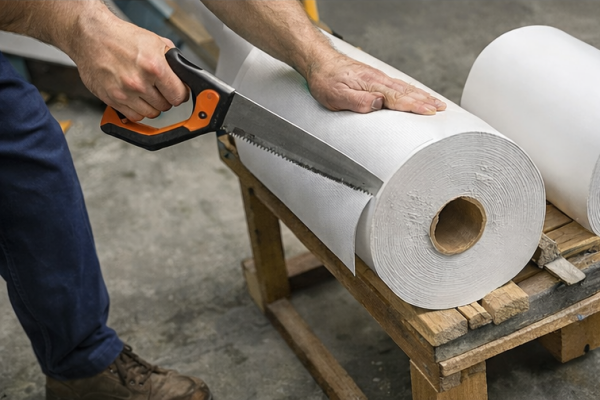
Here’s a breakdown of the key components of a manual paper cutting machine:
Component | Description |
Blade | A sharp edge that cuts through paper and materials. |
Lever or Handle | Used by the operator to activate the cutting action. |
Clamping Mechanism | Holds the paper in place to ensure a precise cut. |
Cutting Bed | The flat surface on which the paper is laid for cutting. |
The simplicity of this design allows for flexibility, especially when working with delicate or custom jobs.
Manual paper cutting machines are particularly useful in smaller or custom production environments. The advantages they offer include:
● Low Upfront Cost: Compared to automated systems, manual cutters are more affordable, making them suitable for businesses with limited budgets or low production volumes.
● Flexibility and Control: Operators have more control over each cut, which is ideal for small-scale operations and custom work.
● Precision for Delicate Tasks: Manual machines excel at making intricate cuts or working with fragile materials that require careful handling.
Manual cutters are commonly used in industries like:
● Crafting and Education: For cutting materials like paper or fabric in small quantities.
● Small-Batch Production: Perfect for businesses that produce low volumes of custom-sized materials, such as labels or packaging.
Despite their benefits, manual paper cutting machines do have limitations that can affect their performance, particularly in high-demand environments. Here are the key challenges:
Challenge | Impact |
Labor Intensity | Requires constant operator involvement, making it time-consuming for large jobs. |
Human Error | Precision depends on the operator’s skill, which can vary, especially with larger or more complex tasks. |
Limited Capacity | Manual machines are not designed for high-volume production, limiting their use in large-scale operations. |
Safety Risks | Operators are in direct contact with the cutting blade, increasing the risk of accidents or injury. |
Manual machines are better suited for low-volume applications where precision and customization are more important than speed.
An automated paper cutting machine is a highly advanced piece of equipment designed to streamline and optimize the process of cutting paper and other materials. These machines operate with minimal manual intervention, using digital controls and PLC systems to automate the cutting process. The system uses servo motors to adjust the blade position, ensuring that each cut is consistent and precise.
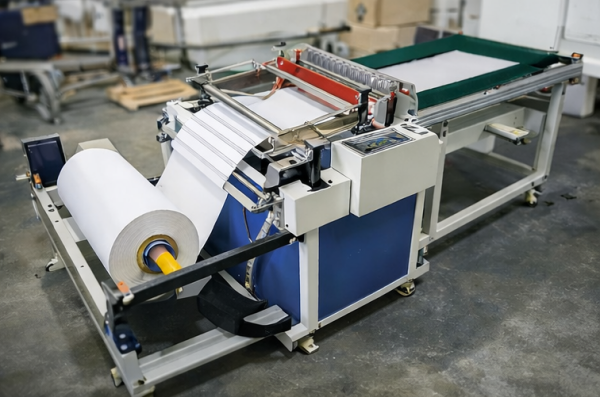
Automated machines are typically equipped with various features that enhance their functionality:
● Digital control panels: Allow operators to input precise measurements and cutting parameters.
● PLC automation: Facilitates seamless operation, improving efficiency and reducing the need for human oversight.
● Servo motor controls: Provide the ability to make high-precision cuts at high speeds, ensuring consistency throughout the production process.
These machines are especially suited for high-volume and continuous production environments, offering superior speed and accuracy compared to manual cutting systems.
The primary benefit of using an automated paper cutting machine is its ability to handle large-scale operations efficiently. Below are some of the key advantages:
● High Production Speed and Efficiency: Automated systems can operate 24/7 without breaks, dramatically increasing production output. They are capable of making hundreds or even thousands of cuts per hour, far exceeding the capabilities of manual cutters.
● Consistent Accuracy and Precision: With the use of servo motor controls and advanced automation, these machines deliver highly accurate cuts every time. This consistency is crucial for large-scale production, where even minor variations in cut size can lead to material wastage or defects.
● Labor Cost Reduction and Safety Improvements: Automated systems reduce the need for manual labor, allowing businesses to allocate staff to other tasks. The reduced human involvement also lowers the risk of workplace injuries, making these systems safer than manual alternatives.
These advantages make automated paper cutting machines an ideal choice for industries that require fast, consistent, and high-quality cutting, such as printing, packaging, and medical industries.
While automated systems offer significant benefits, they come with their own set of challenges:
Challenge | Impact |
High Initial Investment | Automated machines often require a significant upfront cost, which can be a barrier for small businesses or those with limited budgets. |
Maintenance and Servicing Requirements | These machines are complex and require regular maintenance to ensure optimal performance. The costs and time associated with upkeep can add up. |
Space and Setup Considerations | Due to their larger size and intricate components, automated paper cutting machines require ample space for installation and operation, making them unsuitable for smaller workspaces. |
Despite these challenges, the long-term benefits of automated paper cutting—particularly in terms of speed, precision, and labor savings—often outweigh the initial costs, making them an essential investment for businesses focused on scalability and efficiency.
The volume and speed at which paper is cut is one of the key differentiators between manual and automated paper cutting machines.
Manual paper cutting machines rely on the operator to physically perform each cutting task, which limits the speed and throughput. The number of cuts made depends on the operator’s skill and the complexity of the job. As a result, manual machines are best suited for low-volume jobs where precision and control are essential. For example, these machines excel in environments like small print shops or crafts workshops, where the work involves smaller quantities and detailed cuts.
In contrast, automated paper cutting machines are designed for high-volume production environments. With features like servo motor control and PLC automation, these machines can process hundreds or even thousands of sheets per hour. The speed and capacity of automated cutters are far superior to manual systems, making them ideal for industries such as packaging and printing, where efficiency and consistency are paramount.
Feature | Manual Paper Cutting Machines | Automated Paper Cutting Machines |
Speed | Slow, dependent on operator skill | Fast, capable of continuous operation |
Throughput | Low, suitable for small batches | High, suitable for mass production |
Production Time | Longer, manual involvement | Shorter, automated processes |
Best for | Custom and low-volume jobs | High-volume and consistent production |
Manual paper cutting machines provide a level of control that is difficult to match with automated systems. The operator can adjust the pressure and positioning in real time, making manual cutters ideal for precision tasks such as cutting intricate patterns or working with delicate materials. However, the accuracy of manual machines is highly dependent on the operator’s skill and consistency. Even slight variations in pressure or blade angle can result in cuts that are off-center or uneven.
In contrast, automated paper cutting systems are engineered for high-precision, providing consistency and accuracy with every cut. Digital controls, servo motors, and PLC systems ensure that each cut is identical, down to the micron level. Automated systems reduce human error, providing better quality control for large batches where uniformity is essential.
Key differences in precision and accuracy:
● Manual Machines: Operator-dependent, ideal for small runs or custom cuts.
● Automated Machines: High precision with consistent results, suited for high-volume operations.
The cost implications of choosing between manual and automated paper cutting machines are significant. Here’s a breakdown of the cost-related factors:
Factor | Manual Paper Cutting Machines | Automated Paper Cutting Machines |
Initial Investment | Low upfront cost, affordable for small businesses | High upfront cost, expensive due to advanced technology |
Labor Costs | High, requires continuous operator involvement | Low, minimal human intervention needed |
Maintenance | Low, simple mechanics | Higher, requires regular servicing and technical support |
Return on Investment | Slower ROI due to labor costs and lower speed | Faster ROI due to high efficiency and reduced labor costs |
While manual paper cutting machines are cheaper initially, they require more labor, which increases ongoing costs. On the other hand, automated paper cutting machines have a higher initial investment, but the cost savings from reduced labor and faster production times result in a quicker return on investment (ROI) over time. This makes automated systems a better option for large-scale operations where speed and efficiency are critical.
One of the key factors in choosing the right paper cutting machine is the volume of cutting required. Different types of machines excel in different production settings.
For low-volume cutting, a manual paper cutting machine is often the best option. These machines are perfect for businesses that handle smaller batches, custom orders, or unique projects that demand careful attention. Manual cutters offer flexibility and control, allowing operators to make adjustments based on the specific needs of each cut. They are typically used in industries such as arts and crafts, small printing shops, and custom packaging businesses.
However, if your business requires high-volume production, an automated paper cutting machine becomes the better choice. These systems are designed to handle large quantities of paper at a high speed with minimal operator intervention. Automated systems are perfect for industries like packaging, printing, and manufacturing, where efficiency, consistency, and fast throughput are essential.
Factor | Manual Paper Cutting Machine | Automated Paper Cutting Machine |
Production Volume | Low-volume, custom jobs | High-volume, mass production |
Speed | Slower, operator-dependent | Faster, continuous operation |
Best for | Small businesses, bespoke tasks | Large-scale manufacturing, high demand |
When selecting the appropriate paper cutting machine, your budget plays a major role in the decision.
● Manual machines are more affordable and have a lower initial investment, making them ideal for small businesses or startups with limited funds. These machines are simpler in design and have fewer components, which lowers the overall cost.
● On the other hand, automated paper cutting machines require a higher initial investment. The advanced technology and automation features make these machines more expensive upfront. However, for businesses with large-scale operations, automated systems often deliver a higher return on investment (ROI) by reducing labor costs and improving efficiency.
Here's a basic comparison of costs:
Factor | Manual Paper Cutting Machine | Automated Paper Cutting Machine |
Initial Investment | Low, affordable for small businesses | High, requires significant upfront capital |
Labor Costs | Higher, requires more manual labor | Lower, automation reduces labor requirements |
ROI | Slower ROI due to high labor costs | Faster ROI due to increased efficiency |
The level of precision required for your paper cutting tasks is another crucial factor to consider.
● Manual paper cutting machines excel when high precision is necessary. These systems allow operators to make fine adjustments, which is ideal for artisanal products, custom cutting jobs, or intricate designs. For example, manual machines are often used in industries like bookbinding, specialty packaging, and crafts, where precision is critical, but volume is low.
● Automated paper cutting systems, on the other hand, are better suited for high-precision cutting at scale. With advanced features like servo motor controls and PLC systems, these machines provide consistent, high-quality cuts across large quantities of material. This makes them ideal for industries like packaging, printing, and medical material production, where consistency and accuracy must be maintained across many units.
Precision Need | Manual Paper Cutting Machine | Automated Paper Cutting Machine |
Custom Work | Ideal for custom, small-batch, high-precision tasks | Suited for high-precision large-scale jobs |
Consistency | Can vary depending on operator skill | Consistent results with minimal error |
Best for | Small runs, intricate or custom cuts | Large-scale production requiring uniformity |
The future of automated paper cutting systems is driven by cutting-edge technologies that are reshaping the way materials are processed. Automation is becoming smarter and more efficient, with the integration of artificial intelligence (AI) and Internet of Things (IoT) technologies.
● AI-powered systems: Artificial intelligence is revolutionizing the precision and adaptability of automated cutting machines. By using data and machine learning algorithms, these systems can optimize cutting paths and adjust in real-time to enhance cutting efficiency and reduce material waste. For instance, AI can determine the best way to position materials on the cutting bed, ensuring maximum material usage and minimal waste.
● IoT integration: The connection of paper cutting machines to the Internet of Things (IoT) allows for better monitoring and management of the equipment. Through IoT sensors, operators can track machine performance in real time, receive alerts on maintenance needs, and gain valuable insights into the production process. IoT also enables remote diagnostics, helping businesses avoid unplanned downtime.
These advancements not only improve the efficiency of paper cutting but also contribute to waste reduction. Automated systems can use sophisticated algorithms to calculate the best cutting patterns, ensuring that the material is used efficiently and that scrap is minimized.
Technology | Impact on Paper Cutting |
AI-powered systems | Optimize cutting paths and improve material usage |
IoT integration | Enable remote monitoring, diagnostics, and real-time adjustments |
Smart automation | Reduce waste, improve speed, and maintain consistent quality |
While automated paper cutting machines are leading the way, manual paper cutting machines continue to play a crucial role, especially in smaller-scale or custom applications. However, manual cutters are also evolving, integrating semi-automatic features to improve both efficiency and safety.
● Enhanced safety features: New manual cutters are being designed with improved safety mechanisms to prevent accidents. These include automatic blade retraction, safety shields, and pressure sensors that automatically stop the machine if an unsafe condition is detected.
● Semi-automatic features: Some manual paper cutters now include semi-automatic functions like automated paper feeding, automated cut stops, or digital measurement guides. These features reduce the physical effort required by the operator and improve cutting speed, while still offering the control and flexibility that manual machines are known for.
● Ergonomic improvements: In response to operator comfort concerns, manual machines now come with ergonomic features such as adjustable cutting tables and easy-to-grip handles. These designs help reduce operator fatigue and make the cutting process more efficient.
● Automatic blade retraction for enhanced safety.
● Semi-automatic functions for faster, more precise cuts.
● Ergonomic handles and adjustable tables to improve operator comfort.
When choosing between manual and automated paper cutting machines, factors like volume, cost, precision, and scalability must be considered. Both options offer distinct advantages based on production needs. HDK Automation Equipment Co., Ltd. offers high-precision automated paper cutting systems, providing efficient, scalable solutions tailored to various industries. Businesses should evaluate their specific requirements to make the best choice.
A: A paper cutting machine is used to cut large rolls of paper into precise sheets, enhancing efficiency in industries such as packaging, printing, and medical. It helps streamline production processes and ensures high-precision cuts.
A: Manual paper cutting machines have a lower initial cost but require more labor, making them less cost-effective for high-volume production. In contrast, automated paper cutting machines offer higher upfront costs but lower long-term operational expenses.
A: Businesses should consider production volume, precision requirements, budget, and scalability. Automated paper cutting systems are ideal for high-volume operations, while manual cutters are suited for small-scale or custom projects.
