

Views: 0 Author: Site Editor Publish Time: 2025-11-24 Origin: Site
In modern packaging production, choosing the right cutting and sealing equipment directly affects product quality, efficiency, and cost. Among the most commonly used technologies are heat sealing machines and cold cutting machines. Although both are designed to process flexible materials, their working principles, applications, and performance characteristics are quite different. This article explores the key differences between heat sealing and cold cutting machines to help manufacturers select the most suitable solution.
A heat sealing machine uses controlled heat and pressure to bond thermoplastic materials together. The sealing blade or bar heats the film until it melts slightly, allowing layers to fuse and form a strong seal. Heat sealing machines often integrate cutting at the sealing position, making them ideal for bag-making and packaging applications.
Heat sealing machines are widely used for plastic film, PE, PP, and tubular film, especially in food, medical, and consumer goods packaging where airtight sealing is required.
Uses heat and pressure for sealing
Produces strong, leak-proof seals
Suitable for thermoplastic materials
Commonly used in automatic bag making machines
A cold cutting machine separates materials using mechanical force rather than heat. Sharp blades or rotary cutters are used to cut the material cleanly without altering its structure. Because no heat is applied, cold cutting maintains the original properties of the material.
Cold cutting machines are suitable for plastic films, paper, non-woven fabric, laminated materials, and other heat-sensitive substrates that require precise cutting without melting or deformation.
Cuts materials without heat
Maintains material integrity
Produces smooth and accurate edges
Ideal for heat-sensitive or multi-layer materials
Heat sealing machines rely on thermal energy to bond materials, while cold cutting machines use physical force to cut materials without heating.
Heat sealing machines combine sealing and cutting in one process. Cold cutting machines focus only on cutting and require a separate sealing step if sealing is needed.
Heat sealing works best with thermoplastic films such as PE and PP. Cold cutting machines can process a wider variety of materials, including non-thermoplastic substrates.
Heat sealing produces sealed edges that prevent fraying and leakage. Cold cutting creates clean edges but does not provide sealing strength.
Heat sealing machines are ideal for packaging that requires airtight or strong seals. Cold cutting machines are preferred when accurate cutting is required without thermal influence.
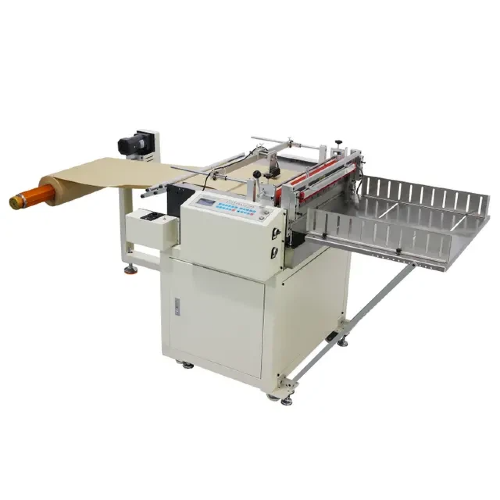
In many packaging applications, hot sealing cold cutting machines are used to combine the advantages of both technologies. These machines use heat to seal the material and a cold blade to cut it, ensuring strong seals with clean cutting edges. This solution is especially popular for tubular film packaging and plastic bag production.
When deciding between heat sealing and cold cutting machines, manufacturers should consider:
Material type and thickness
Sealing strength requirements
Production speed and output volume
Product appearance and edge quality
Maintenance and operating costs
Choosing the right machine ensures stable production and consistent packaging quality.
Understanding the differences between heat sealing and cold cutting machines is essential for improving efficiency and product quality in the packaging industry. Heat sealing machines provide strong and reliable seals, while cold cutting machines offer precise cutting without heat. Depending on your material and application, selecting the appropriate technology—or a combined solution—can significantly enhance production performance.
For packaging manufacturers working with plastic film and flexible materials, making the right equipment choice is a key factor in long-term success.
