

Views: 0 Author: Site Editor Publish Time: 2026-02-03 Origin: Site
Bag making today is no longer a simple manual craft but a structured production process driven by precision and consistency. The right combination of tools, equipment, and workflow design determines efficiency, output quality, and scalability. At the center of this system is the Bag Making Machine, which connects cutting, forming, sealing, and assembly into a coordinated production flow. In this article, you will learn how different bag making tools and equipment work together, how to choose them based on materials and scale, and how manufacturers can build reliable, efficient, and professional bag production operations.
A Bag Making Machine acts as the operational backbone of modern bag manufacturing. It integrates multiple production steps such as cutting, forming, sealing, and stitching into a controlled and repeatable process. Instead of relying on isolated manual actions, the machine aligns material handling, motion control, and timing to ensure each bag meets consistent specifications. This integration reduces variation between units and improves throughput. In many factories, the machine also defines the rhythm of the entire workshop, determining how supporting tools, labor, and quality checks are organized around it.
Manual tools still play an important role in bag production. They offer flexibility during prototyping, customization, and small-batch work. Skilled operators use them for fine adjustments, hardware placement, and finishing details. Automated equipment, however, excels in speed, repeatability, and volume output. A Bag Making Machine reduces reliance on operator experience by standardizing key steps. When both are combined correctly, they form a balanced system where machines handle repetition and tools handle precision.
Different bag materials demand different tools. Fabric bags need precise stitching and tension control. Nonwoven and plastic bags rely on heat or ultrasonic sealing. Composite materials often require reinforced cutting and bonding systems. Tool selection should always follow product requirements rather than habit. A well-matched Bag Making Machine ensures material compatibility and stable processing, while supporting tools refine details. This alignment prevents unnecessary rework and protects material integrity.
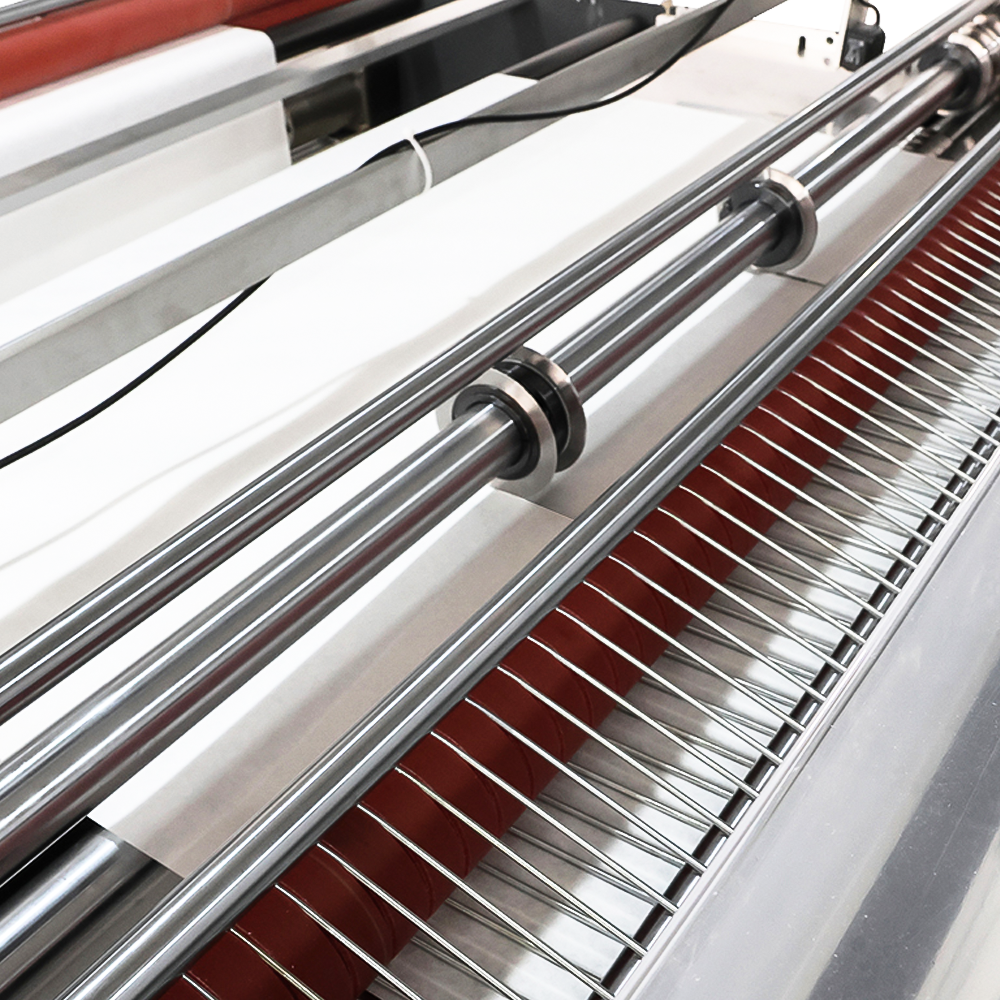
Cutting is the first quality gate in bag production. A Bag Making Machine may use rotary cutting, die cutting, or heat cutting depending on material type. Clean edges reduce waste and simplify downstream assembly. Accurate forming ensures panels align during sealing or stitching. When cutting and forming are controlled by the same machine system, dimensional consistency improves across large batches. This precision directly affects bag appearance and structural balance.
Bonding methods determine how a bag holds together under load, motion, and repeated use. Choosing between sealing, stitching, or ultrasonic bonding depends on material behavior, required strength, and production speed. When integrated into a Bag Making Machine, these systems turn design intent into stable, repeatable joints.
| Bonding System | Typical Materials | Main Applications | Key Technical Parameters (Common Industrial Ranges) | Units | Operational Considerations |
|---|---|---|---|---|---|
| Heat sealing (impulse) | LDPE, HDPE films | Plastic shopping bags, liner bags | Sealing temperature: 130–180 | °C | Dwell time must match film thickness to avoid burn-through |
| Heat sealing (constant heat) | PP, laminated films | Nonwoven bags, composite bags | Sealing pressure: 0.2–0.5 | MPa | Stable temperature control improves seam uniformity |
| Heat sealing (bar type) | Nonwoven fabrics | Side seams, bottom seals | Seal width: 5–15 | mm | Wider seals increase peel strength but add material stiffness |
| Sewing (lockstitch) | Woven fabrics, canvas | Tote bags, backpacks | Stitch density: 3–5 | stitches/cm | Lower density weakens seams; higher density risks fabric damage |
| Sewing (chain stitch) | Heavy textiles | Reinforced seams | Thread consumption: +15–20 vs lockstitch | % | Requires secure back-tacking to prevent seam unraveling |
| Ultrasonic bonding | Nonwoven PP, thin thermoplastics | Hygiene bags, lightweight carriers | Ultrasonic frequency: ~20 | kHz | Material must transmit vibration efficiently for uniform bonding |
| Ultrasonic bonding | Multilayer nonwoven | Decorative seams | Bonding speed: 5–20 | m/min | Excess speed reduces bonding depth |
| Modular bonding head | Mixed materials | Multi-product lines | Changeover time: < 15 | min | Modular heads increase machine flexibility |
| Integrated bonding station | Automated lines | Continuous production | Seam strength variation: ≤ ±10 | % | Integration reduces handling-induced defects |
| Bond integrity testing | All bonded seams | Quality control | Peel strength: 8–25 (material-dependent) | N/15 mm | Testing frequency should reflect load expectations |
Tip:When a Bag Making Machine supports multiple bonding systems, standardize seam strength targets rather than process parameters alone. Different bonding methods can meet the same performance requirement if their operating windows are clearly defined and controlled.
Production speed depends on machine configuration, automation level, and material flow. A properly tuned Bag Making Machine delivers stable output without sacrificing accuracy. Consistency across long runs builds customer trust and simplifies quality control. Compared with fully manual assembly, machine-driven production reduces variation caused by fatigue or skill differences. This stability is especially valuable for B2B orders with strict specifications.
Precision cutting influences both dimensional accuracy and downstream stability. Rotary cutters and industrial shears rely on controlled blade geometry and sharpness to minimize fiber pull-out and edge deformation. Automated cutting modules connected to a Bag Making Machine maintain fixed cutting paths and consistent feed speed, which reduces cumulative dimensional drift. From a process control view, stable cutting accuracy lowers alignment correction later in assembly. Manual cutting remains effective for prototypes or complex contours where visual judgment provides higher precision than fixed tooling.
Measuring tools translate design intent into physical output. Fixed rulers and templates establish baseline dimensions, while machine-integrated sensors and stops enforce repeatability during production. In automated environments, consistent measurement reduces setup variation and speeds changeovers. A Bag Making Machine benefits from accurate measuring inputs because feeding, folding, and sealing actions depend on predictable material length and width. Scientifically, reducing dimensional variance early in the process narrows tolerance stacking and improves overall yield.
Integration requires that cutting, measuring, and forming share the same reference system. When dimensions defined at cutting match machine guides and feeding paths, material moves smoothly without correction. A Bag Making Machine operates most efficiently when upstream tools deliver components within defined tolerances. This alignment reduces sensor errors, prevents misfeeds, and stabilizes cycle time. Integrated workflows also simplify process control by making deviations easier to detect and correct at the source.
In industrial bag production, sewing units are not selected by brand alone but by load capacity, stitch stability, and compatibility with upstream automation. When configured correctly, they work in coordination with a Bag Making Machine to deliver durable seams at consistent speed and quality.
| Equipment / Attachment Type | Typical Application | Key Technical Parameters (Industry-Standard Ranges) | Units | Material Compatibility | Operational & Setup Notes |
|---|---|---|---|---|---|
| Heavy-duty lockstitch sewing unit | Main seams, structural panels | Max sewing speed: 2,000–3,000 stitches/min | spm | Canvas, woven fabric, laminated textiles | Speed should be reduced for multi-layer assemblies to maintain stitch integrity |
| Walking foot sewing unit | Thick or uneven layers | Presser foot lift: 12–16 mm | mm | Foam-backed fabric, composite layers | Walking mechanism prevents layer shifting during feeding |
| Cylinder-bed sewing unit | Tubular or curved sections | Arm diameter: 45–70 mm | mm | Handles, gussets, side panels | Ideal for hard-to-reach seams without flattening the bag body |
| Presser foot (standard steel) | General-purpose stitching | Contact pressure: 20–40 N | N | Cotton, polyester fabrics | Excess pressure may leave marks on softer materials |
| Presser foot (Teflon-coated) | Low-friction surfaces | Friction coefficient: ≤ 0.1 | — | PU, PVC, coated fabrics | Reduces drag and improves stitch consistency on sticky surfaces |
| Industrial sewing needles | All machine stitching | Needle size range: Nm 90–140 | Nm | Medium to heavy materials | Needle size must match thread Tex value and material density |
| Thread tension assembly | Stitch formation control | Tension range: 100–600 cN | cN | All stitched materials | Incorrect tension causes puckering or loose stitches |
| Inline sewing station | Continuous production lines | Integration speed tolerance: ±5% vs main line | % | Automated workflows | Synchronization with Bag Making Machine feed rate is critical |
| Standalone sewing station | Secondary operations | Operator cycle time: 10–30 s per seam | s | Custom or reinforced areas | Best suited for operations requiring visual judgment |
| Needle cooling / lubrication system | High-speed continuous sewing | Operating temperature: < 120 °C at needle | °C | Synthetic threads | Prevents thread melting during extended runs |
Tip:When sewing units operate inline with a Bag Making Machine, stitch quality should be validated at full production speed rather than during setup runs. Heat buildup, vibration, and material compression behave differently under continuous load, directly affecting seam durability.
Heat and ultrasonic sealing systems rely on controlled energy transfer to bond thermoplastic materials. Heat sealing uses temperature, pressure, and dwell time to soften polymer chains and create molecular diffusion across layers. Ultrasonic sealing converts high-frequency vibration into localized heat, bonding materials without external thermal exposure. When integrated into a Bag Making Machine, both systems maintain precise energy input and alignment, which minimizes material shrinkage and edge deformation. Proper parameter control also improves seal uniformity, supporting higher line speeds without compromising seam strength or visual clarity.
Assembly efficiency is achieved by reducing handoffs between processes. A Bag Making Machine consolidates forming, sealing, and trimming into a synchronized sequence governed by a single control system. From a production engineering perspective, fewer transitions reduce cycle time and variation. Inline assembly also improves repeatability, since each operation occurs at a fixed position and timing. This structured flow lowers labor dependency, simplifies supervision, and enables predictable throughput, which is essential for scheduling, inventory control, and on-time delivery.
Hardware installation requires controlled force and precise alignment to avoid material distortion. Manual and pneumatic presses apply calibrated pressure that deforms metal components without damaging surrounding layers. From a mechanical perspective, consistent press depth and perpendicular alignment ensure uniform load transfer across the hardware base. When these tools are positioned downstream of a Bag Making Machine, they complete functions that machines cannot localize effectively. Accurate setting improves zipper tracking, snap engagement force, and rivet retention, all of which directly affect user experience and product durability.
Load-bearing areas experience repeated tensile and shear forces during use. Reinforcement tools introduce backing plates, additional stitch rows, or rivets to distribute stress over a wider area. Material science principles show that spreading load reduces peak stress and slows fatigue failure. Integrating reinforcement steps with Bag Making Machine output ensures consistent placement relative to seams and folds. This approach strengthens handles, corners, and strap attachments without increasing overall material thickness beyond manageable limits.
Synchronization between hardware tools and machine output is essential for balanced production. Cycle time analysis helps match press operations with the forming speed of a Bag Making Machine. When hardware setting operates within the same takt time, work-in-process inventory remains low and material flow stays continuous. Proper synchronization also reduces handling damage and operator idle time. Aligning these stages creates a stable production rhythm that supports both efficiency and repeatable quality.
In bag manufacturing, consumables directly influence seam integrity, visual finish, and machine stability. Threads, tapes, and adhesives must be selected as part of the production system, ensuring they work smoothly with materials, processes, and the operating conditions of a Bag Making Machine.
| Consumable Category | Common Types | Typical Applications | Key Technical Parameters (Industry Ranges) | Units | Selection & Usage Notes |
|---|---|---|---|---|---|
| Sewing thread | Polyester filament thread | Fabric bags, reinforced seams | Linear density: Tex 40–90 | Tex | Polyester offers balanced strength and abrasion resistance for bag seams |
| Sewing thread | Nylon filament thread | Heavy-duty or load-bearing seams | Tensile strength: 6–9 cN/dtex | cN/dtex | Higher elasticity; tension must be adjusted to avoid seam distortion |
| Sewing thread | Bonded polyester thread | Industrial bag stitching | Breaking force: 25–45 N (Tex 70–90) | N | Bonded coating reduces fraying at high sewing speeds |
| Double-sided basting tape | Acrylic-based sewing tape | Zipper placement, panel positioning | Width: 3–12 mm | mm | Must be needle-safe to prevent adhesive buildup on needles |
| Double-sided basting tape | Wash-away tape | Temporary fabric alignment | Adhesive residue: <1% after washing | % | Suitable for fabric bags requiring post-wash finishing |
| Pressure-sensitive adhesive | Rubber-based adhesive | Pre-fixation before sealing | Tack strength: 2–4 N/cm | N/cm | Excess adhesive can affect heat-seal quality |
| Hot-melt adhesive | EVA hot-melt | Composite and laminated bags | Softening point: 80–120 °C | °C | Requires stable temperature control in the Bag Making Machine |
| Structural adhesive | Polyurethane adhesive | Reinforced seams, handle zones | Shear strength: 5–10 MPa | MPa | Curing time must align with production cycle |
| Compatibility check | Thread–material match | All stitching operations | Needle size match: Nm 90–110 | Nm | Incorrect matching increases skipped stitches and thread breakage |
| Machine interaction | Adhesive–feeding system | Automated production lines | Adhesive transfer rate ≤ 0.1 g/m | g/m | Excess transfer may contaminate rollers or guides |
Tip:When running automated lines, always validate consumables at target machine speed rather than low-speed trials. Threads and tapes that perform well manually may behave differently under continuous operation on a Bag Making Machine, especially regarding tension stability and residue buildup.
Interfacing and structural layers define how a bag behaves during forming, stitching, and long-term use. Nonwoven, woven, and foam-based interfacings are selected based on stiffness, recovery, and thickness uniformity. In machine production, consistent thickness helps a Bag Making Machine maintain stable feeding pressure and sealing alignment. From a materials standpoint, higher flexural rigidity improves shape retention, while controlled density prevents excessive bulk at seams. Choosing interfacing with predictable compression characteristics also reduces needle deflection and sealing inconsistency during high-speed operation.
Maintenance accessories play a direct role in production stability. Proper lubricants reduce friction on moving parts and prevent heat buildup in continuous operation. Cleaning tools remove fiber dust, adhesive residue, and polymer buildup that can interfere with sensors and rollers. Scheduled replacement of wear parts, such as cutting blades and sealing elements, preserves dimensional accuracy. A well-maintained Bag Making Machine operates within designed tolerances, minimizing unplanned stoppages and ensuring consistent output quality over extended production cycles.
Production scale should drive every tooling decision, not the other way around. In small-batch or pilot production, flexibility matters more than speed, so adjustable cutting tools, interchangeable fixtures, and semi-automatic stations perform well. As volume increases, variability becomes costly. At this stage, a Bag Making Machine provides controlled feeding, synchronized forming, and repeatable bonding, which sharply reduces unit-to-unit deviation. Scientifically, higher throughput amplifies small errors, so automation is not only about speed but also about statistical process control. Matching tools to scale keeps material usage, labor input, and defect rates within predictable ranges.
Workflow efficiency improves when tools are paired based on process logic rather than convenience. Equipment pairing means aligning cutting accuracy with forming tolerance, and matching sealing speed to material feed rate. A Bag Making Machine sets the core pace, while auxiliary tools must operate within its cycle time to avoid idle stages. From an industrial engineering view, this reduces work-in-process accumulation and shortens cycle time. When tools support machine precision, handoffs become smoother, error propagation decreases, and output quality stabilizes without additional inspection pressure.
A scalable setup allows growth without disrupting existing production. Modular Bag Making Machine designs support upgrades such as additional sealing units, inline inspection, or higher-speed feeders. Adaptable tools with standardized interfaces ensure compatibility as capacity expands. From a planning perspective, scalability protects capital investment by extending equipment lifecycle. It also supports gradual automation, letting manufacturers validate demand before committing fully. Structuring tools and machines around modular growth enables long-term efficiency, controlled risk, and consistent quality as order volumes evolve.
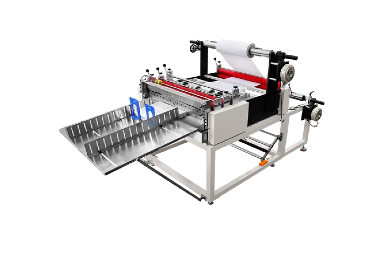
In bag manufacturing, quality control is built through measurable actions rather than subjective judgment. The right tools and a well-configured Bag Making Machine translate quality requirements into controlled parameters, stable processes, and verifiable inspection results across every production batch.
| Quality Control Area | Key Tools / Equipment | Practical Application | Key Technical Indicators (Examples) | Units | Operational & Management Notes |
|---|---|---|---|---|---|
| Dimensional consistency | Automatic-feed Bag Making Machine with mechanical positioning fixtures | Bag forming, cutting, folding | Finished size tolerance ±0.5–1.0 mm (aligned with product drawings) | mm | Fixtures require periodic calibration; feeding tension directly affects size accuracy |
| Cutting accuracy | Heat cutting or rotary cutting module | Plastic and nonwoven bag edge formation | Edge deviation ≤ ±0.3 mm (common industrial benchmark) | mm | Blade or heater wear may cause rough edges or uneven melting |
| Sealing strength control | Heat sealing or ultrasonic bonding system | Bag mouth, side seams, bottom seals | Seal strength ≥ 10–20 N / 15 mm (material-dependent, to be validated) | N / mm | Temperature, pressure, and dwell time must stay within a defined process window |
| Stitching stability | Industrial sewing head with tension control | Fabric and composite bag stitching | Stitch density 3–5 stitches / cm (typical range) | stitches/cm | Unstable thread tension can lead to skipped or broken stitches |
| Process stability | Automated Bag Making Machine control system | Continuous batch production | Speed variation ≤ ±2% (typical for industrial equipment) | % | Excessive manual intervention reduces process repeatability |
| Operator consistency | Standard operating procedures (SOPs) | Multi-shift operations | Inter-shift defect rate variance ≤ 1–2% (internal control target) | % | Structured training is more effective than experience-only reliance |
| Visual appearance inspection | Inspection station with auxiliary lighting | Printed surfaces, cosmetic defects | Detectable defect size ≥ 0.5 mm | mm | Lighting angle and illumination intensity influence detection accuracy |
| Structural integrity testing | Tensile or pull-test tools | Handles, seams, load-bearing points | Handle pull strength ≥ 5–15 kgf (usage-dependent) | kgf | Sampling frequency should reflect order risk and usage conditions |
| Hardware installation accuracy | Calipers and dedicated gauges | Zippers, buckles, rivets | Installation deviation ≤ ±0.2–0.5 mm | mm | Hardware batch variation should be verified before mass use |
| Final outgoing inspection | Finished-goods inspection table | Pre-shipment inspection | Sampling ratio 2–10% (based on customer requirements) | % | Final inspection should remain independent from production teams |
Tip:In practice, stable quality is achieved by locking critical parameters into the Bag Making Machine rather than increasing inspection frequency. When equipment settings and inspection criteria are aligned, quality becomes predictable and scalable.
Bag making depends on a coordinated system of tools, processes, and a reliable Bag Making Machine to achieve stable quality and efficient output. When cutting, bonding, assembly, and inspection are aligned, manufacturers gain consistency, scalability, and cost control. Selecting equipment based on materials, production scale, and workflow design helps reduce variation and improve long-term performance. HDK Automation Equipment Co., Ltd. delivers bag making solutions that support precise control, flexible configuration, and dependable operation, enabling manufacturers to build efficient production lines and create durable, high-quality bags with lasting value.
A: They include cutting, sealing, sewing, and inspection tools used with a Bag Making Machine to produce consistent bags.
A: A Bag Making Machine integrates forming, sealing, and trimming for stable quality and higher output.
A: Manual tools handle details while the Bag Making Machine manages repeatable core processes.
A: Plastic, nonwoven, and composite bags rely on a Bag Making Machine for sealing and forming.
A: A Bag Making Machine reduces variation through fixed parameters and controlled workflows.
A: Automation level, capacity, and Bag Making Machine configuration drive overall investment.
